Read this comic as text
Slide 1: Send the waiter
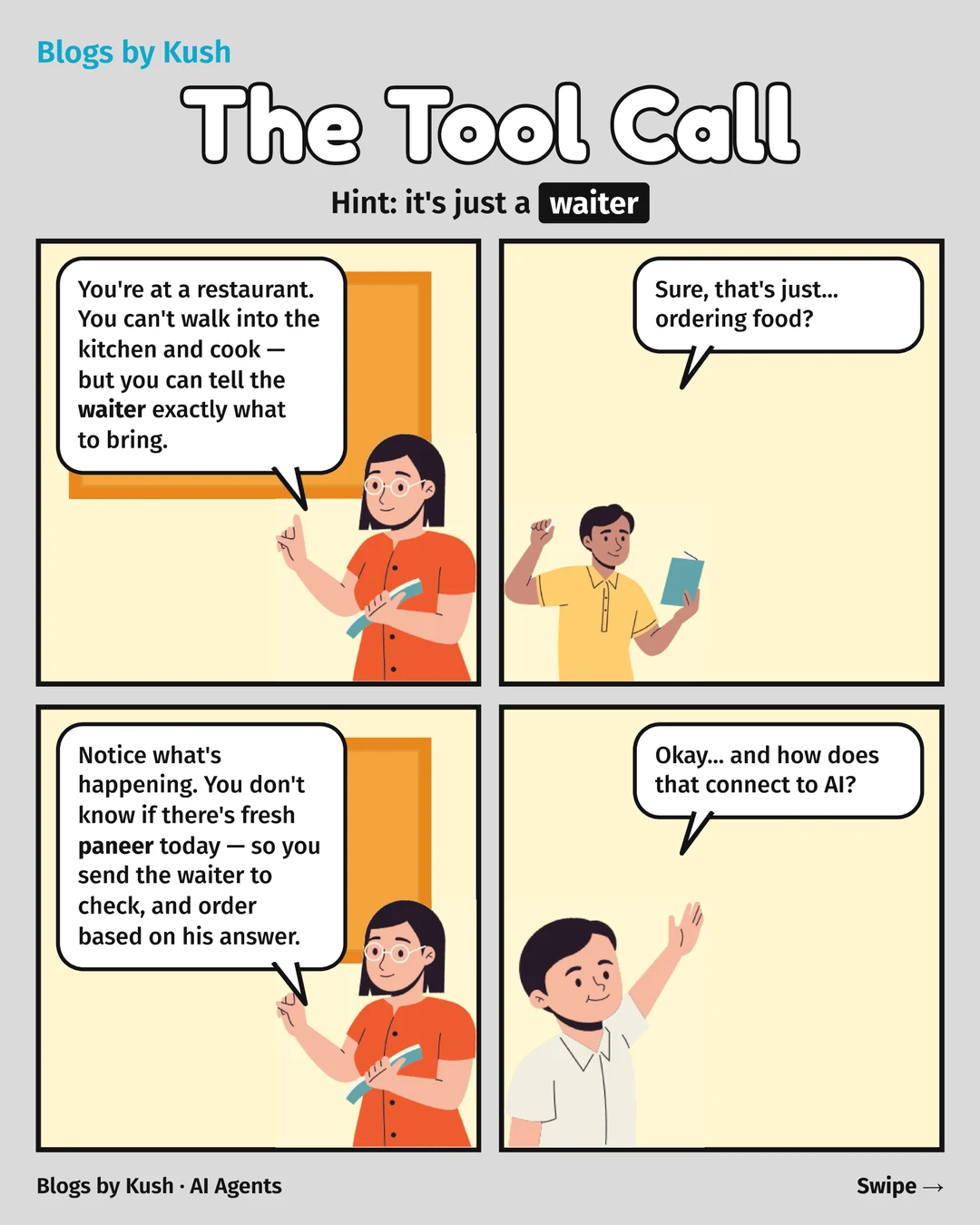
Teacher: You’re at a restaurant. You can’t walk into the kitchen and cook, but you can tell the waiter exactly what to bring.
Student: Sure, that’s just… ordering food?
Teacher: Notice what’s happening. You don’t know if there’s fresh paneer today, so you send the waiter to check, and order based on his answer.
Student 2: Okay… and how does that connect to AI?
Slide 2: A customer who can only talk
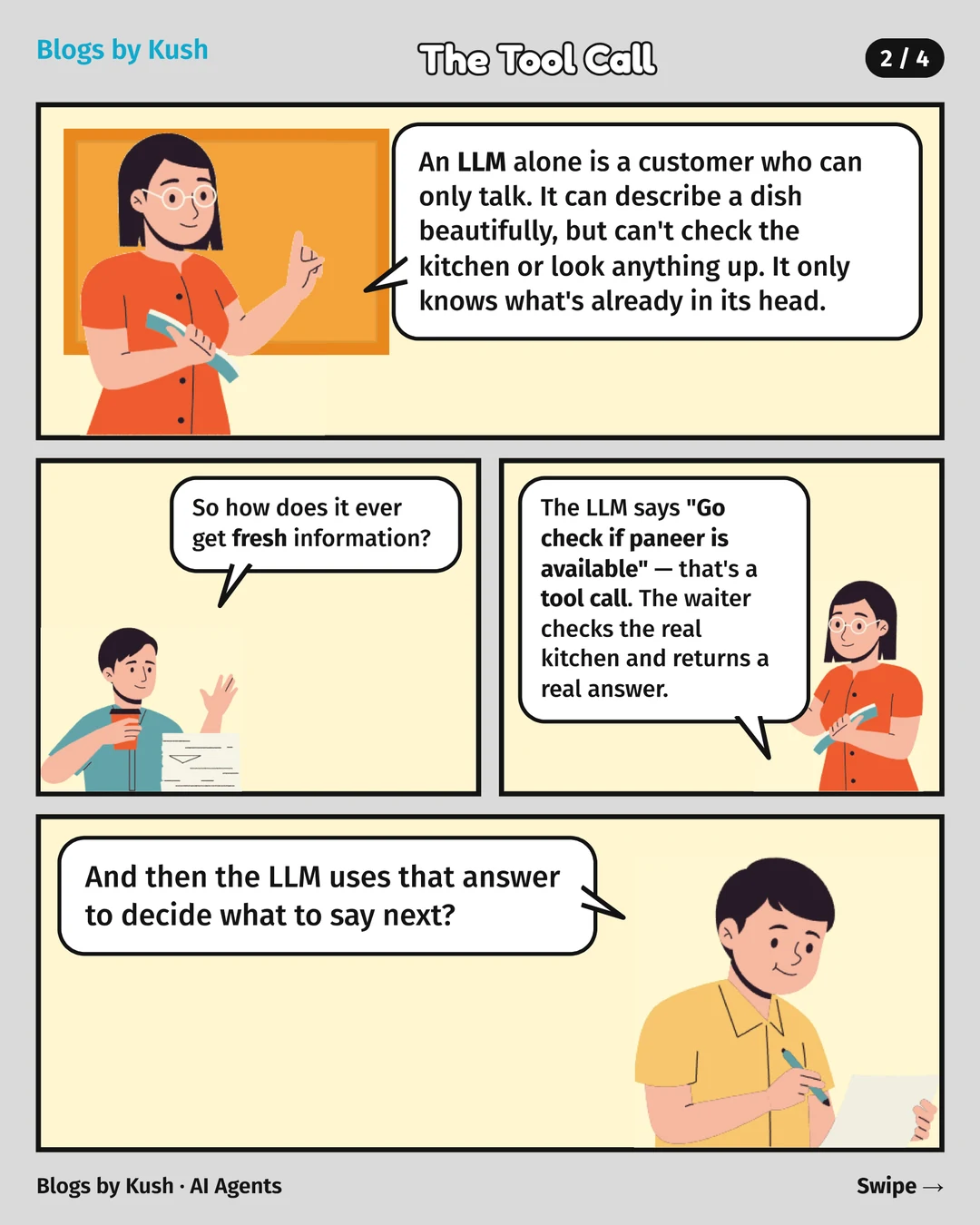
Teacher: An LLM alone is a customer who can only talk. It can describe a dish beautifully, but can’t check the kitchen or look anything up. It only knows what’s already in its head.
Student: So how does it ever get fresh information?
Teacher: The LLM says “Go check if paneer is available”. That’s a tool call. The waiter checks the real kitchen and returns a real answer.
Student 2: And then the LLM uses that answer to decide what to say next?
Slide 3: A real answer, not a guess
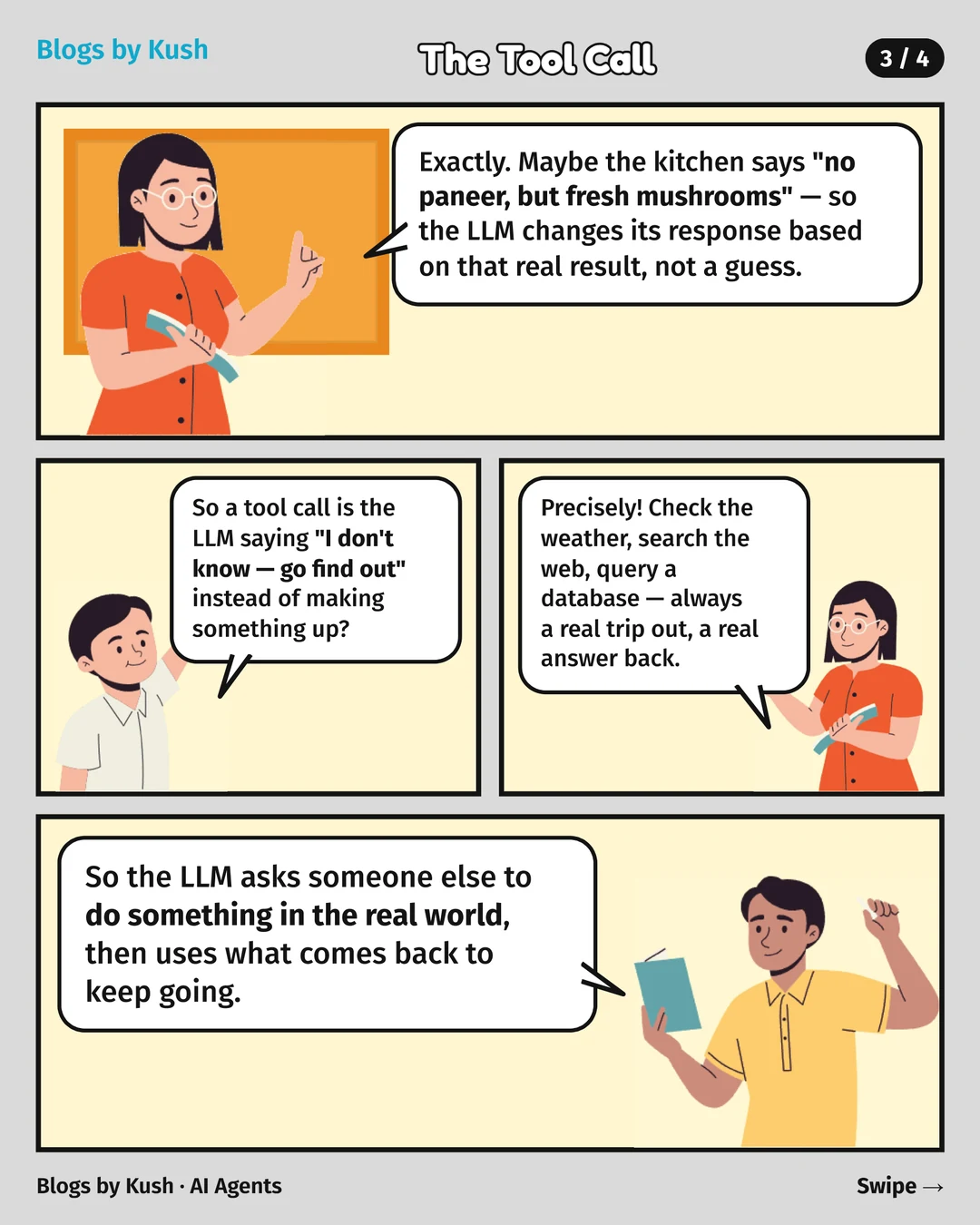
Teacher: Exactly. Maybe the kitchen says “no paneer, but fresh mushrooms”, so the LLM changes its response based on that real result, not a guess.
Student: So a tool call is the LLM saying “I don’t know, go find out” instead of making something up?
Teacher: Precisely! Check the weather, search the web, query a database: always a real trip out, a real answer back.
Student 2: So the LLM asks someone else to do something in the real world, then uses what comes back to keep going.
Slide 4: The first ingredient of an agent
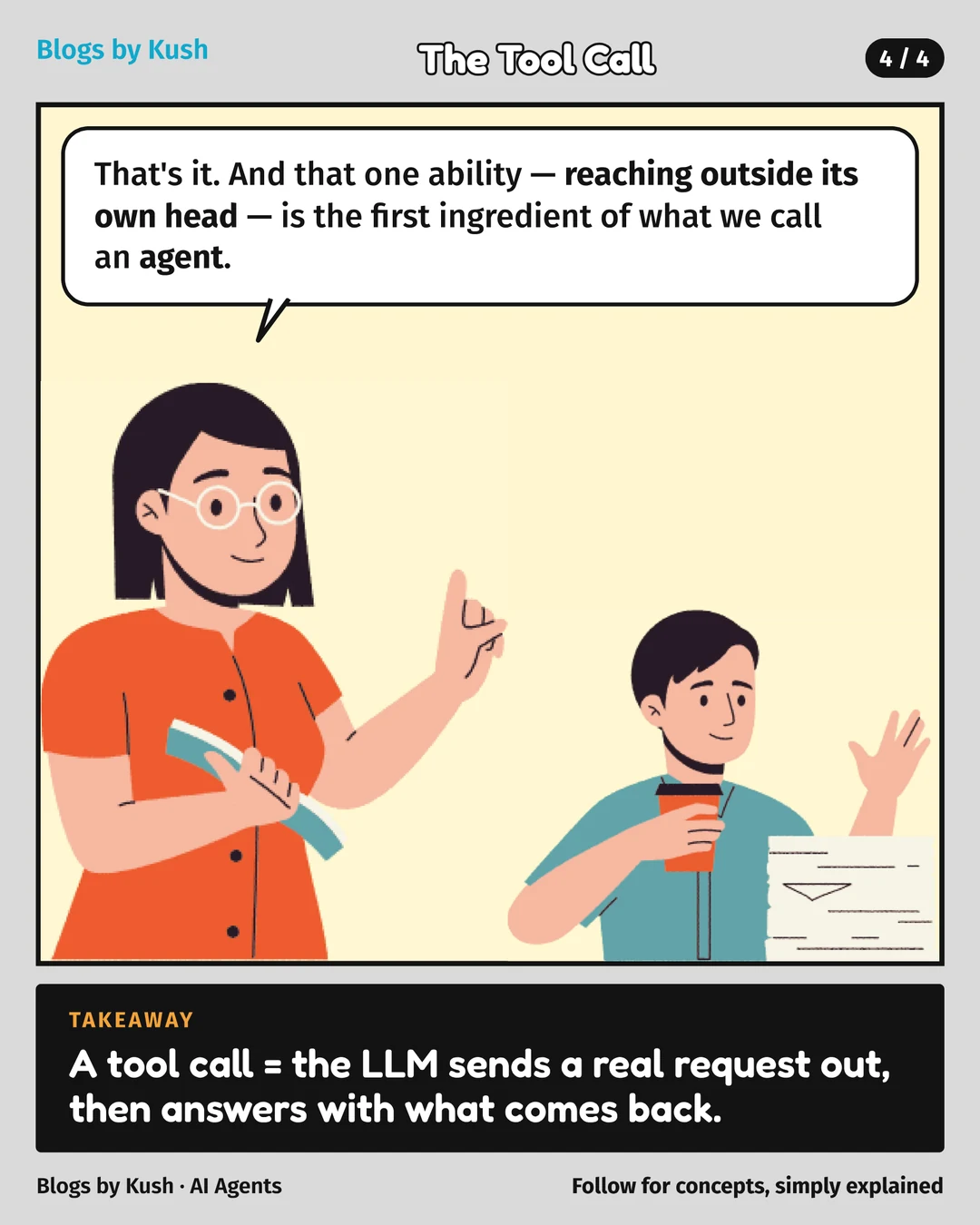
Teacher: That’s it. And that one ability, reaching outside its own head, is the first ingredient of what we call an agent.
Takeaway: A tool call = the LLM sends a real request out, then answers with what comes back.
The concept in plain words
A tool call is how a large language model (LLM) asks something outside itself to do a job and bring back the result. On its own, an LLM only knows what’s already in its head. It can talk, but it can’t check anything.
Think of the restaurant. You can’t walk into the kitchen, but you can send the waiter to find out if there’s fresh paneer today. The LLM does the same: it asks for something like “check if paneer is available”, a tool (web search, a weather service, a database) does the real work, and the answer comes back.
The LLM then uses that real answer to decide what to say next. If the kitchen says “no paneer, but fresh mushrooms”, it changes its reply instead of guessing.
That one ability, reaching outside its own head, is the first ingredient of what we call an AI agent.