Read this comic as text
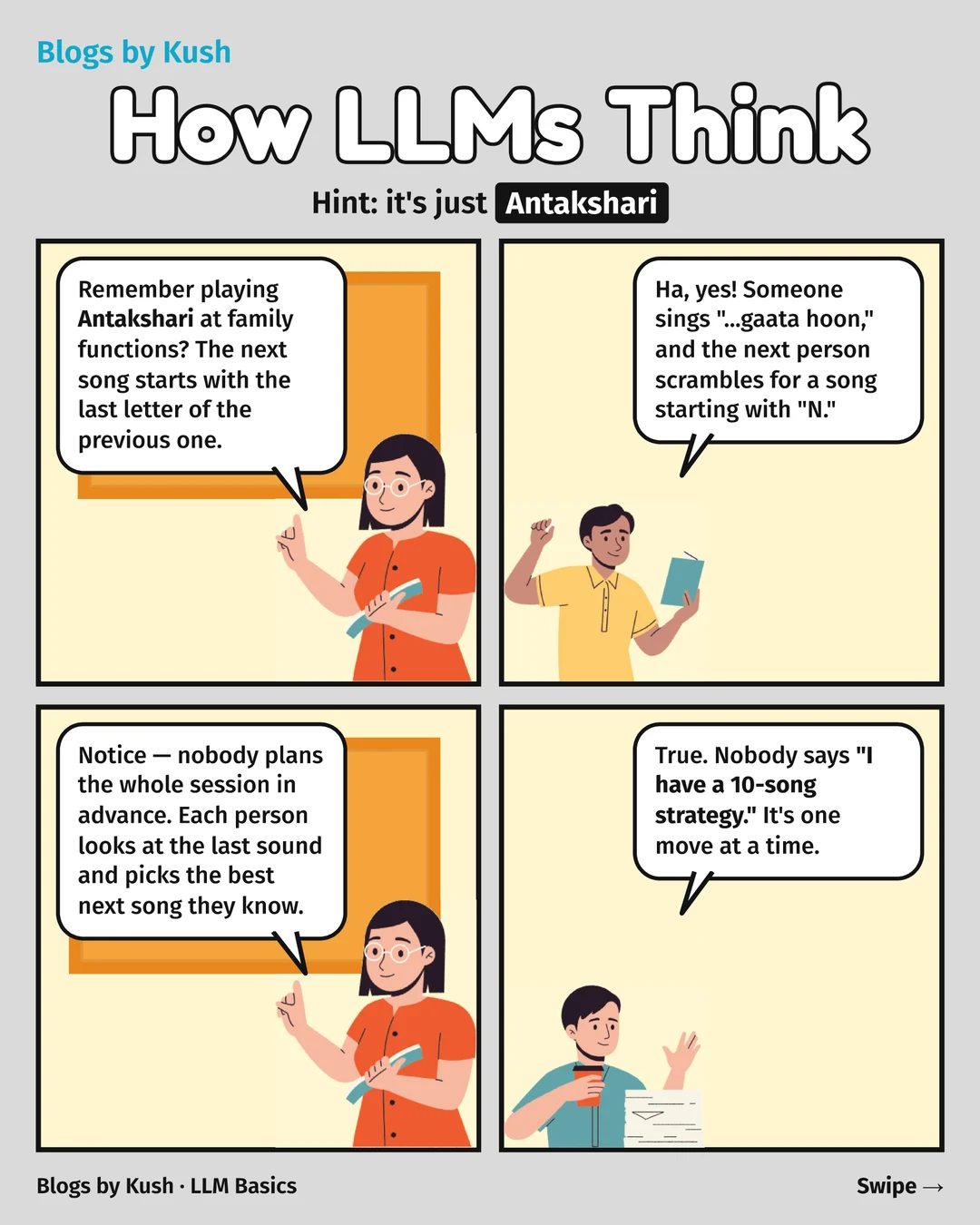
Slide 1: Remember Antakshari?
Teacher: Remember playing Antakshari at family functions? The next song starts with the last letter of the previous one.
Student: Ha, yes! Someone sings “…gaata hoon,” and the next person scrambles for a song starting with “N.”
Teacher: Notice, nobody plans the whole session in advance. Each person looks at the last sound and picks the best next song they know.
Student 2: True. Nobody says “I have a 10-song strategy.” It’s one move at a time.
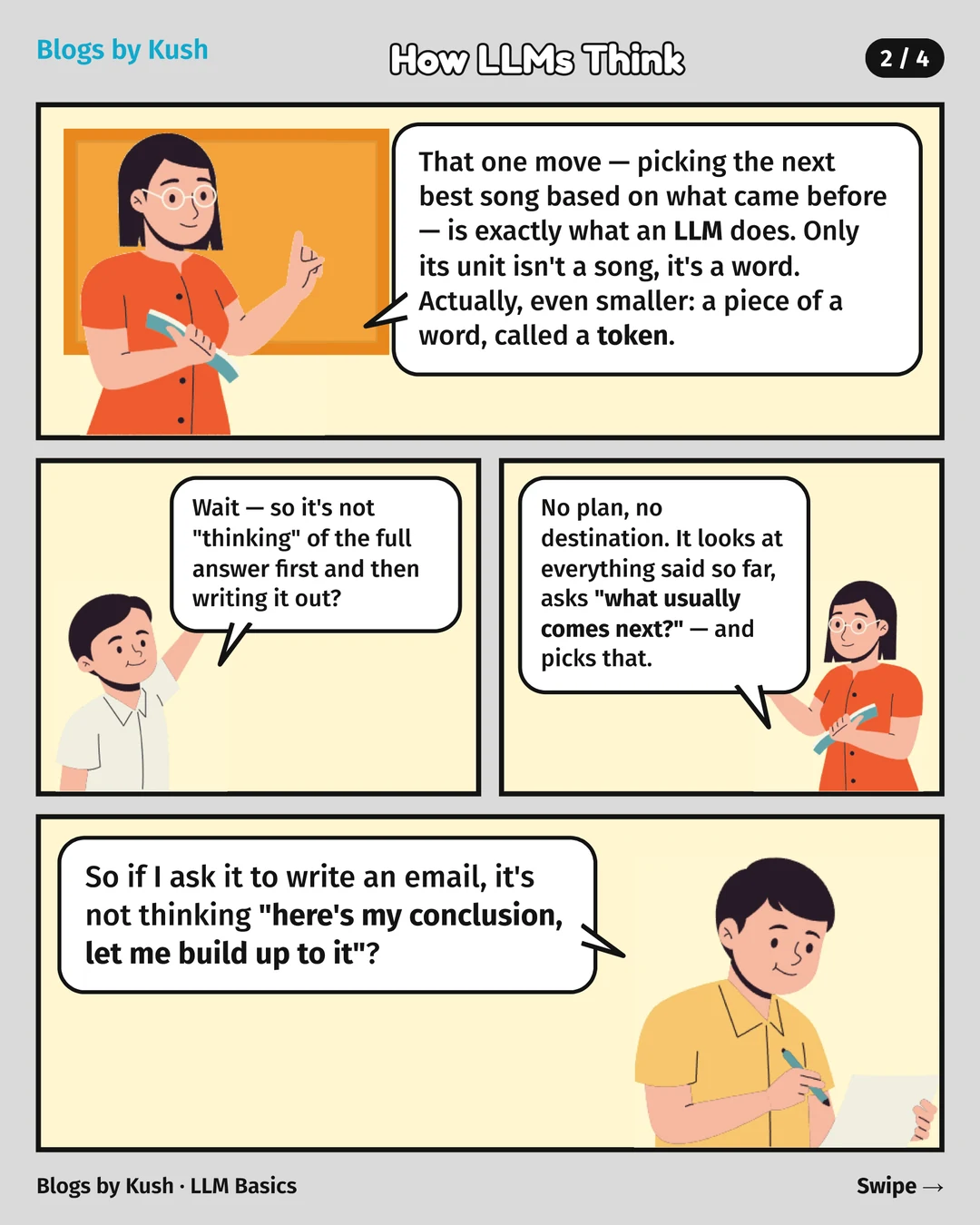
Slide 2: One move at a time
Teacher: That one move, picking the next best song based on what came before, is exactly what an LLM does. Only its unit isn’t a song, it’s a word. Actually, even smaller: a piece of a word, called a token.
Student: Wait, so it’s not “thinking” of the full answer first and then writing it out?
Teacher: No plan, no destination. It looks at everything said so far, asks “what usually comes next?”, and picks that.
Student 2: So if I ask it to write an email, it’s not thinking “here’s my conclusion, let me build up to it”?
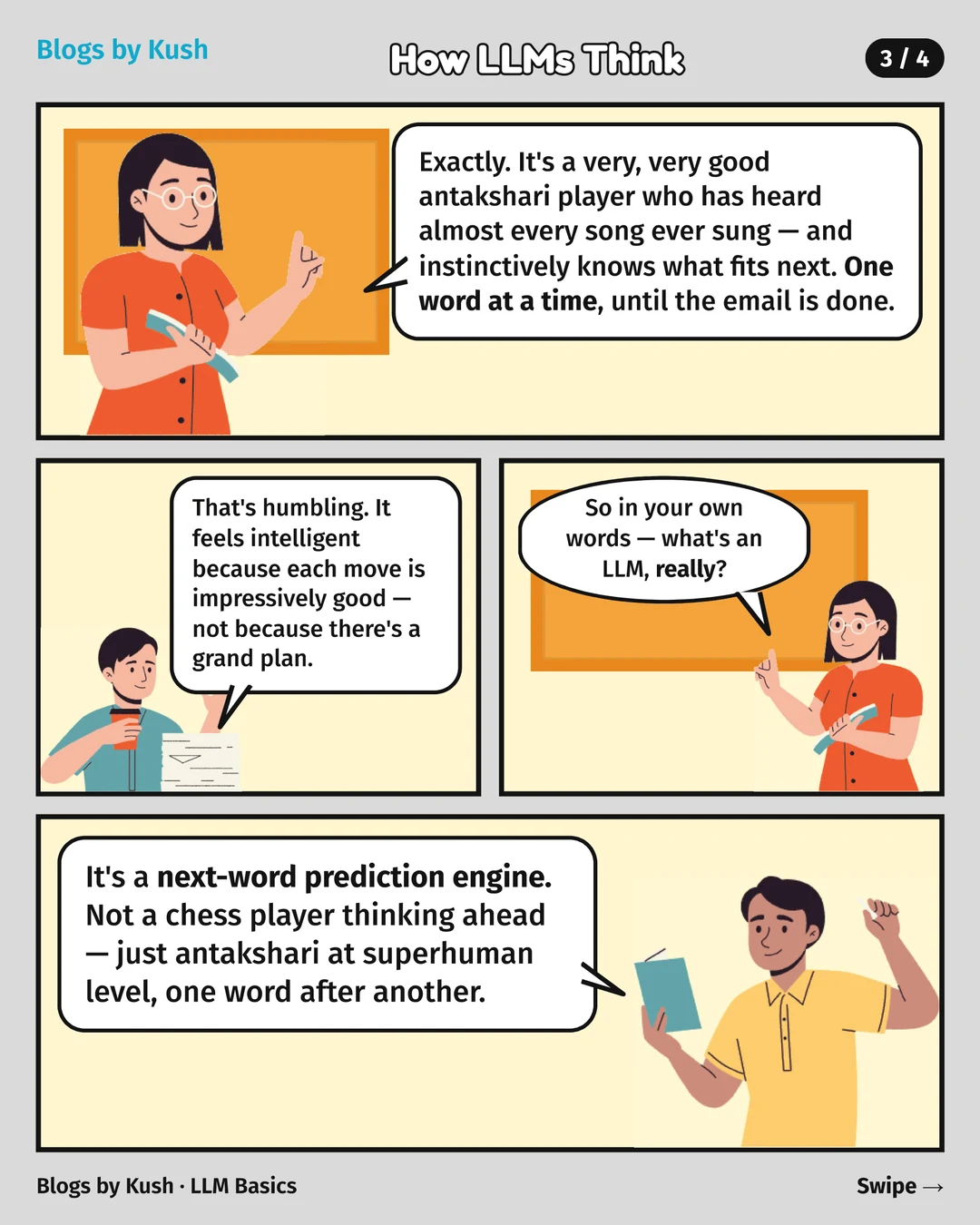
Slide 3: A superhuman Antakshari player
Teacher: Exactly. It’s a very, very good Antakshari player who has heard almost every song ever sung, and instinctively knows what fits next. One word at a time, until the email is done.
Student: That’s humbling. It feels intelligent because each move is impressively good, not because there’s a grand plan.
Teacher: So in your own words, what’s an LLM, really?
Student 2: It’s a next-word prediction engine. Not a chess player thinking ahead, just Antakshari at superhuman level, one word after another.
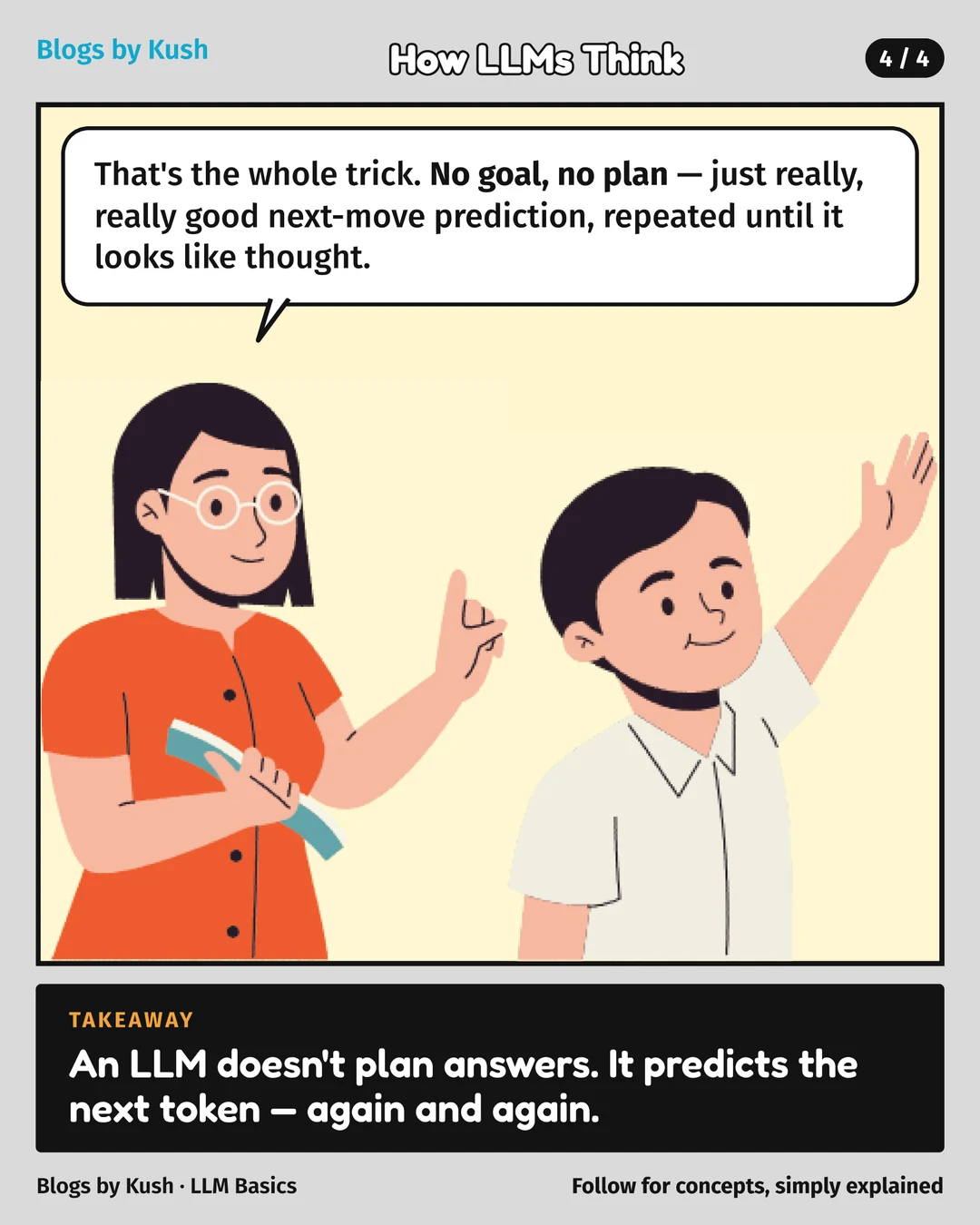
Slide 4: The whole trick
Teacher: That’s the whole trick. No goal, no plan, just really, really good next-move prediction, repeated until it looks like thought.
Takeaway: An LLM doesn’t plan answers. It predicts the next token, again and again.
The concept in plain words
A large language model (LLM), the technology behind ChatGPT, Claude and Gemini, does one thing: given some text, it predicts the piece of text most likely to come next. That piece is a token, usually a word or part of a word.
When you ask a question, it predicts one token, adds it to the text, and predicts the next one using everything written so far. It repeats this hundreds of times until the answer is done. That’s the Antakshari loop: look at what came before, pick the best next move, repeat.
Its moves are good because it was trained on an enormous amount of text. Like the player who has “heard almost every song”, it has seen so many patterns that its next guess is usually right.
One difference from Antakshari: an LLM doesn’t just look at the last word, it rereads the whole conversation every time. That’s why the context you give it matters so much.