Read this comic as text
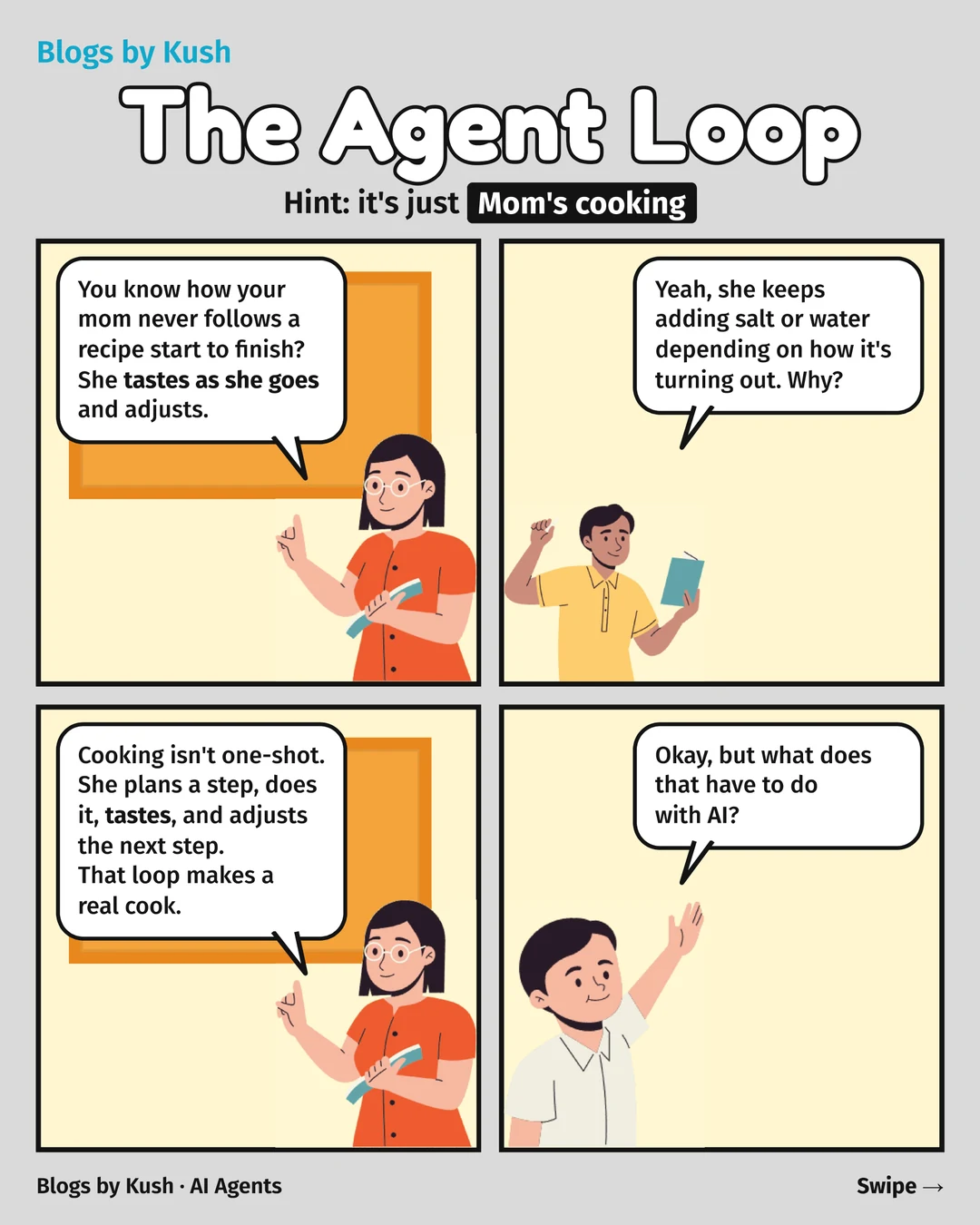
Slide 1: Mom tastes as she goes
Teacher: You know how your mom never follows a recipe start to finish? She tastes as she goes and adjusts.
Student: Yeah, she keeps adding salt or water depending on how it’s turning out. Why?
Teacher: Because cooking isn’t a one-shot task. She plans a step, does it, tastes it, and changes the next step based on that taste. That loop is exactly what separates a real cook from someone blindly following a recipe card.
Student 2: Okay, but what does that have to do with AI?
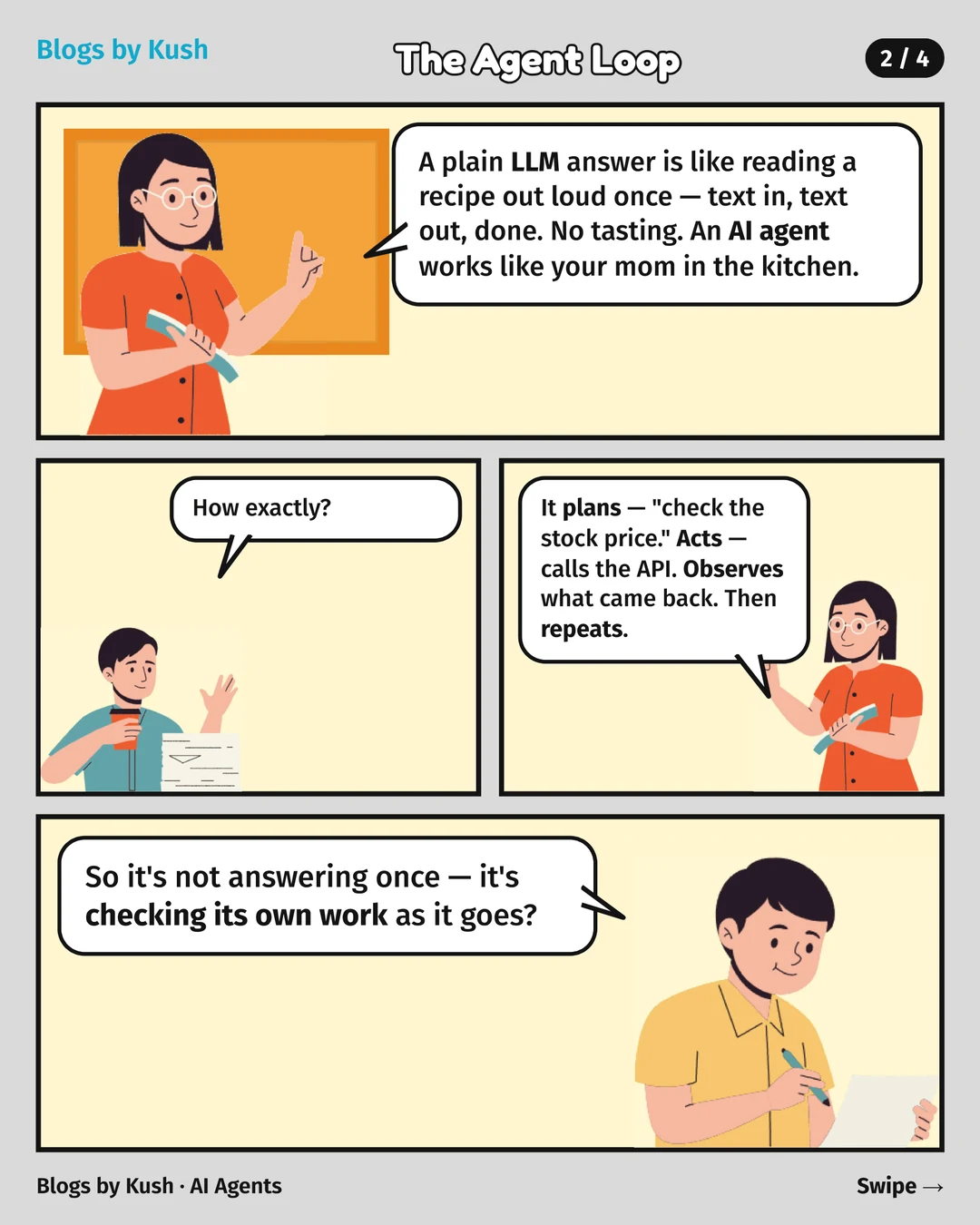
Slide 2: Plan, act, observe, repeat
Teacher: A plain LLM answer is like reading a recipe out loud once: text in, text out, done. No tasting involved. An AI agent, though, works like your mom in the kitchen.
Student: How exactly?
Teacher: First it plans: “let me check the stock price.” Then it acts: actually calls the tool or API. Then it observes: looks at what came back. Then it repeats: plans the next step based on that observation.
Student 2: So it’s not just answering once, it’s checking its own work as it goes?
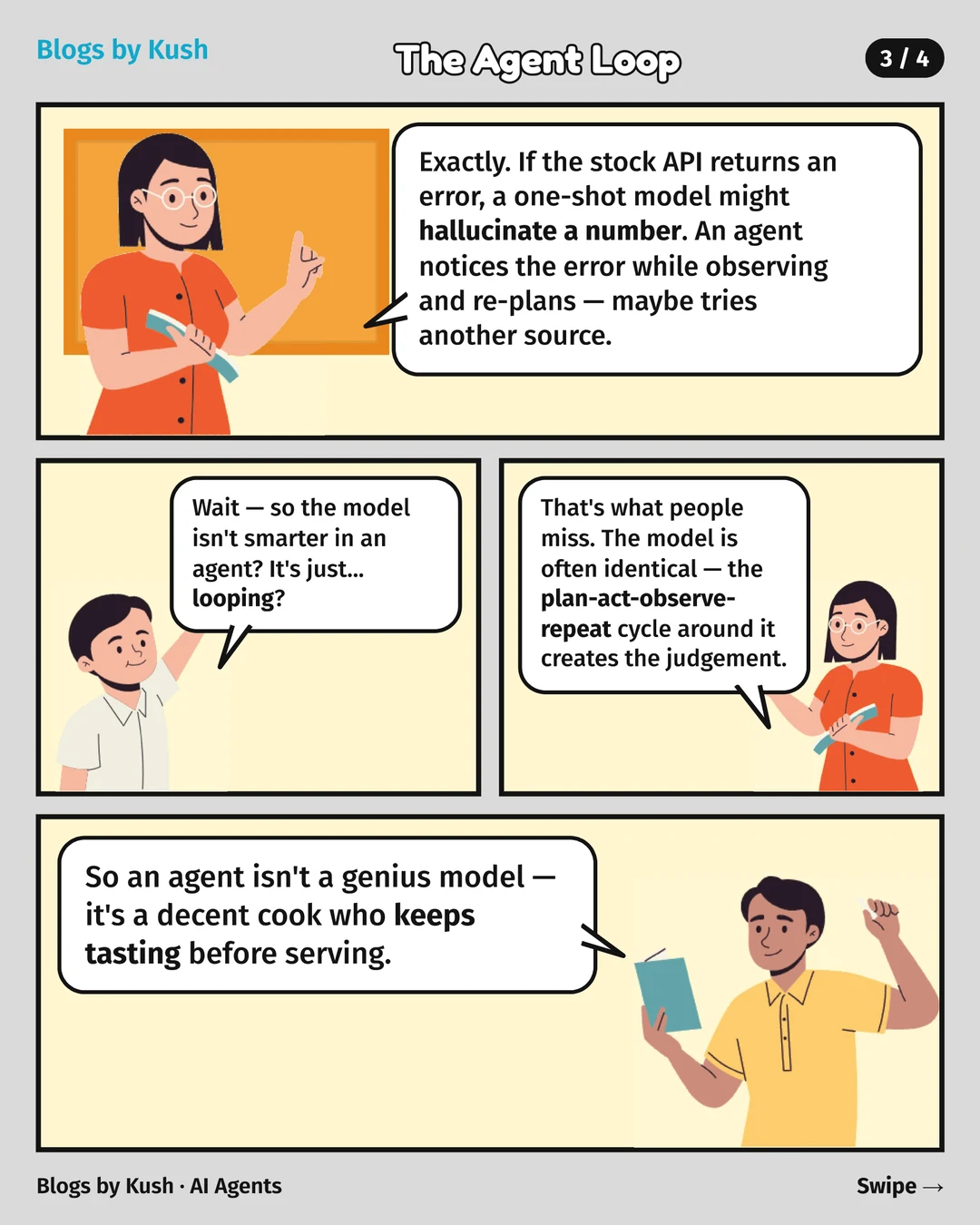
Slide 3: Same model, wrapped in a loop
Teacher: Exactly. If the stock API returns an error, a one-shot model would just hallucinate a number and move on. An agent notices the error in the “observe” step and re-plans, maybe tries a different source.
Student: Wait, so the model itself isn’t smarter in an agent, it’s just… looping?
Teacher: That’s the part people miss. The underlying model is often identical. It’s this plan-act-observe-repeat cycle wrapped around it that creates the feeling of judgement and autonomy.
Student 2: So an agent isn’t a genius model. It’s a decent cook who keeps tasting the dish before serving it.
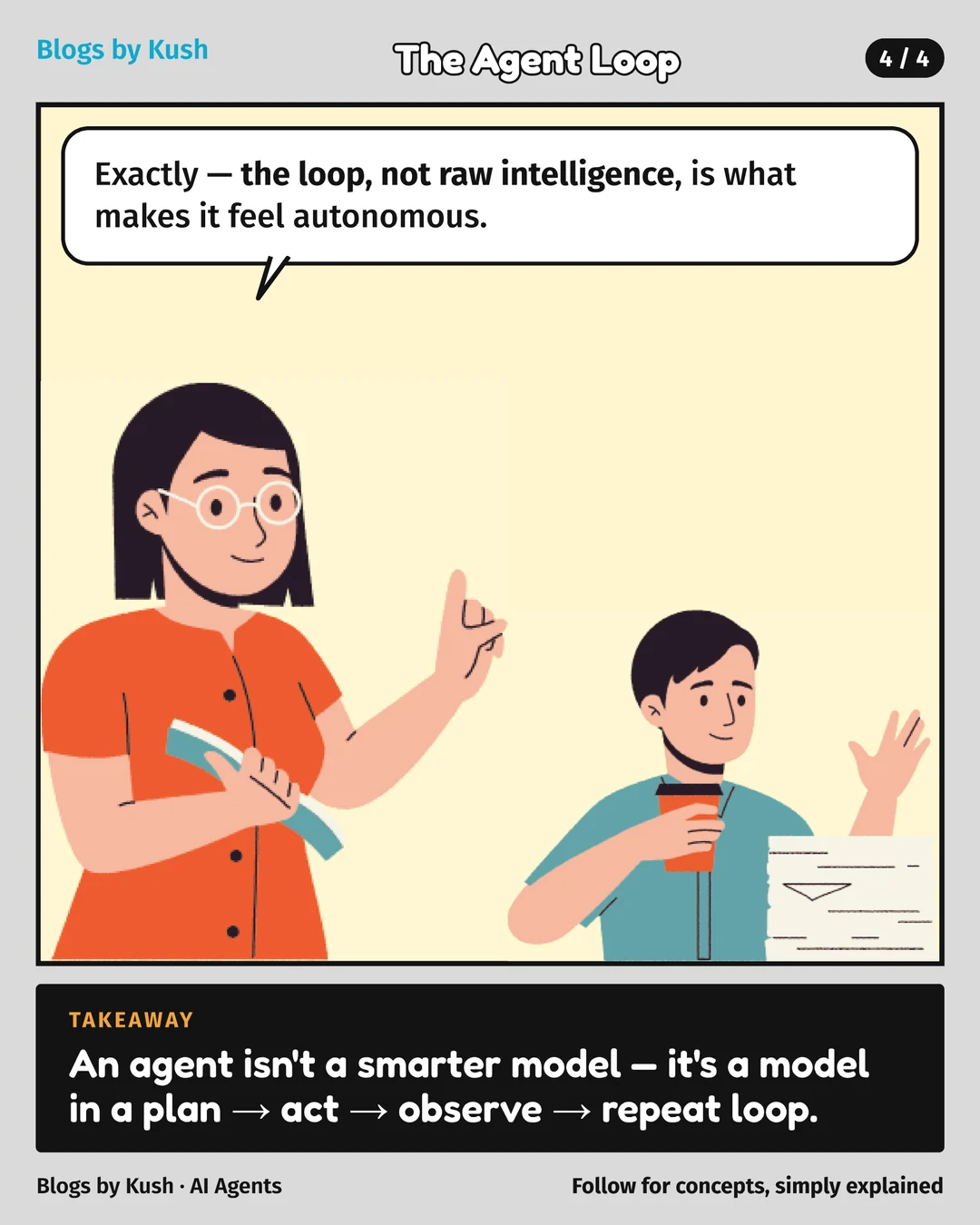
Slide 4: The loop, not raw intelligence
Teacher: Exactly: the loop, not raw intelligence, is what makes it feel autonomous.
Takeaway: An agent isn’t a smarter model. It’s a model in a plan → act → observe → repeat loop.
The concept in plain words
The agent loop is the cycle an AI agent runs: plan a step, act on it, observe what came back, then repeat with the next step.
It’s how Mom cooks. She doesn’t follow a recipe start to finish. She does a step, tastes, and adjusts the next one. A plain LLM answer is more like reading the recipe out loud once: text in, text out, done. An agent plans (“let me check the stock price”), acts by calling a tool or API, looks at the result, and decides what to do next.
That “observe” step is what catches mistakes. If the stock API returns an error, a one-shot model might hallucinate a number. An agent notices the error and re-plans, maybe trying another source.
The surprising part: the model inside an agent is often the same one. What feels like judgement and autonomy comes from the loop wrapped around it, not from a smarter model.